


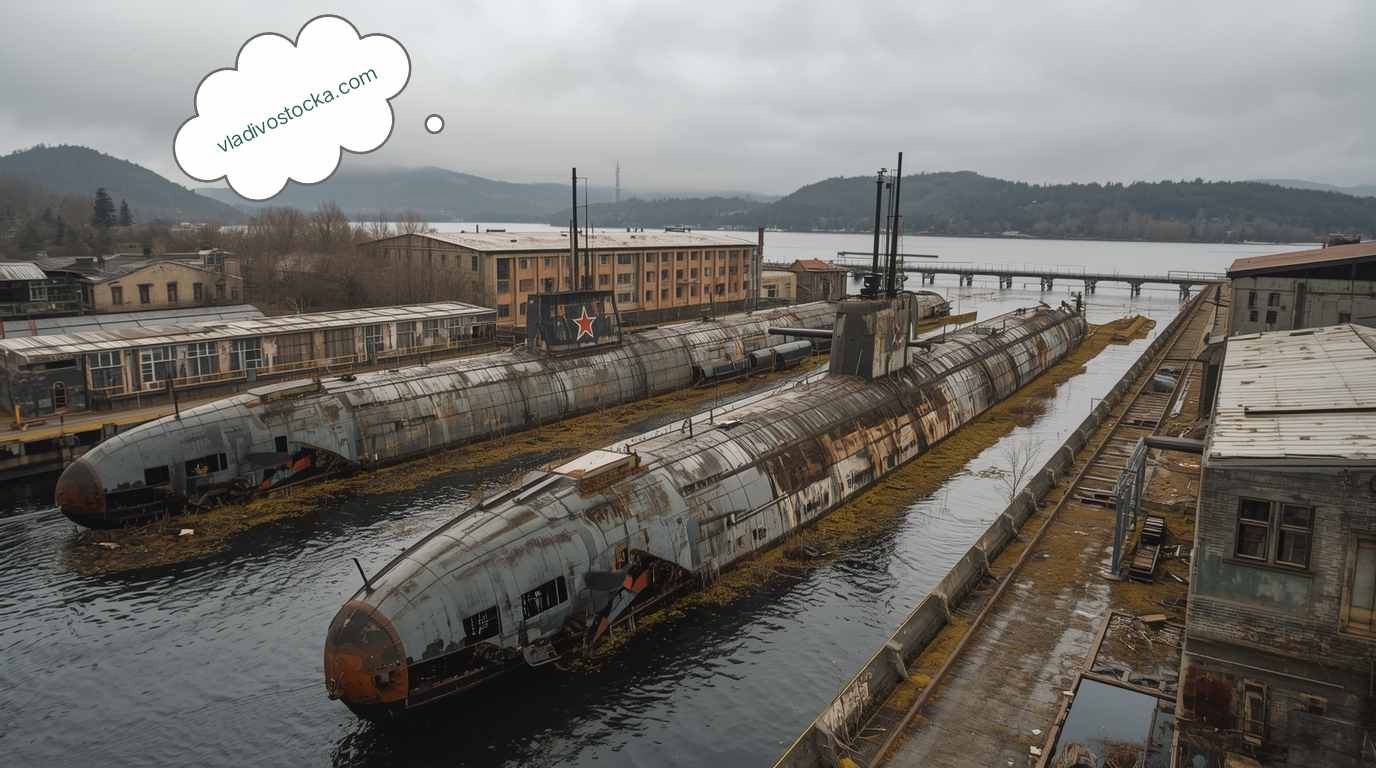
The cold waters around Russia’s far eastern coast hide strange relics of the Cold War. Rusting hulls. Silent submarine pens. Entire fleets that once carried nuclear missiles now sitting motionless. When people search for the story behind abandoned soviet submarines vladivostock, they usually expect a simple answer. But the truth is tangled in politics, military secrecy, economic collapse, and a few haunting accidents beneath the sea.
Vladivostok has always been one of Russia’s most strategic naval cities. For decades it served as a powerful gateway to the Pacific. During the Soviet era, it was also a closed military zone, meaning ordinary citizens and foreign visitors were banned from entering. Beneath that secrecy, enormous submarine fleets operated from hidden bases along the coastline. The legacy of abandoned soviet submarines vladivostock still echoes through these old docks and shipyards today.
Today, scattered across docks, remote coves, and decaying shipyards, many abandoned soviet submarines remain as eerie reminders of a vanished superpower. Some are partially dismantled. Others were simply left behind. Many of the stories surrounding abandoned soviet submarines vladivostock still puzzle historians.
And that raises a question people keep asking.
Why were so many submarines abandoned in the first place?
The Strategic Importance of Vladivostok During the Cold War
To understand the mystery of abandoned soviet submarines vladivostock, you have to step back into Cold War strategy.
Vladivostok sits near the Sea of Japan and the Pacific Ocean. That location made it ideal for projecting Soviet naval power toward Asia and the United States. The Soviet Pacific Fleet was headquartered here, and it operated dozens of submarines including nuclear powered attack subs and ballistic missile carriers.
The nearby vladivostok submarine base and surrounding naval facilities were massive. Submarine pens carved into rocky hillsides, repair docks, fuel depots, and torpedo storage bunkers stretched across the coastline. Much of the infrastructure that once supported the fleet later became associated with abandoned soviet submarines vladivostock.
For decades, these bases hosted some of the Soviet Union’s most advanced underwater weapons.
Then the Soviet Union collapsed in 1991.
Everything changed almost overnight.
Read more about : Counselar Office in Vladivostock: Hours, Map & Visitor Guide
What Exactly Are the Abandoned Submarines?
When people talk about abandoned soviet submarines vladivostock, they are usually referring to aging Cold War vessels that were removed from active service but never fully dismantled.
Some belong to older diesel powered classes built in the 1960s and 1970s. Others are nuclear submarines that became too expensive to maintain. A few were damaged in accidents and never repaired. These aging vessels eventually became part of the larger mystery of abandoned soviet submarines vladivostock.
The region also contains remnants of an abandoned soviet submarine base, including rusted docks and crumbling maintenance hangars. These places once handled thousands of sailors and technicians every year. Over time they became closely associated with the phenomenon of abandoned soviet submarines vladivostock.
Now they feel almost ghostlike.
In certain harbors, you can still spot the outlines of russian abandoned submarines tied to piers that have partially collapsed. Paint has peeled away. Hatches are sealed. In some cases, parts of the hulls have been removed for scrap metal. Many researchers documenting abandoned soviet submarines vladivostock focus on these shipyards.
But the scale of the problem surprised even Russian officials.
During the 1990s, Russia inherited more than 200 nuclear submarines from the Soviet Navy. Maintaining them required huge budgets that the struggling post Soviet economy simply did not have.
So many vessels were mothballed.
Some stayed that way for decades, becoming well known examples of abandoned soviet submarines vladivostock.
Why So Many Soviet Submarines Were Left Behind
The mystery behind abandoned soviet submarines vladivostock becomes clearer when you look at the economic collapse that followed the fall of the USSR.
Military spending dropped sharply. Shipyards shut down. Skilled engineers left the naval industry.
Submarines that required constant maintenance suddenly became liabilities. Many eventually joined the growing list of abandoned soviet submarines vladivostock.
Dismantling nuclear submarines is extremely complicated. Reactors must be removed safely, radioactive material stored, and the hull cut apart in controlled facilities. That process can take years and cost millions for a single vessel.
According to an article published by BBC News, Russia had nearly 120 decommissioned nuclear submarines waiting for dismantlement during the late 1990s. International programs later helped fund the cleanup process, but the backlog remained significant for years. A large portion of those vessels were connected to the story of abandoned soviet submarines vladivostock.
That explains why some abandoned russian submarine hulls stayed moored in remote naval yards long after their service ended.
In certain areas near Vladivostok, abandoned naval infrastructure became part of the landscape.
Rust. Sea air. Silence. All quietly tied to the history of abandoned soviet submarines vladivostock.
Life Inside an Abandoned Submarine
Exploring abandoned submarine sites has become an unusual niche interest among urban explorers and documentary filmmakers.
Stepping into an abandoned soviet submarine is like entering a frozen moment from the Cold War. Many explorers travel to document locations connected to abandoned soviet submarines vladivostock.
Narrow corridors barely wide enough for two people. Metal ladders leading through multiple decks. Pipes, valves, and analog gauges covering almost every wall.
Many compartments still contain equipment such as sonar consoles, torpedo loading systems, and navigation stations. Some spaces even retain faded instruction labels written in Russian.
But exploring abandoned submarine structures is dangerous.
These vessels were never designed to sit unused for decades. Corrosion weakens the hull. Toxic materials may remain inside. Flooded compartments can collapse unexpectedly. This is one reason the sites linked to abandoned soviet submarines vladivostock are rarely open to the public.
Still, the eerie atmosphere attracts curious adventurers who want to document the remains of Soviet naval engineering.
The Vladivostok Submarine Collision Incident
The region’s submarine history is not just about abandonment. Accidents also shaped its reputation.
One widely discussed event linked to the area is the vladivostok submarine collision, where naval vessels operating in the crowded Pacific waters accidentally struck one another during exercises.
Submarine collisions were rare but extremely serious during the Cold War. Navigation relied heavily on sonar and periscope observations, especially before modern satellite tracking became widespread.
When accidents happened, they were often classified.
Only years later did details slowly emerge through declassified reports and naval histories. Some of these incidents indirectly influenced how abandoned soviet submarines vladivostock were handled later.
Abandoned Soviet Warships and Mega Machines
Submarines were not the only Cold War relics left behind.
Russia inherited a massive arsenal of military hardware after the Soviet Union dissolved. In shipyards across the country, observers documented abandoned soviet warships, unfinished aircraft carriers, and various naval prototypes.
The situation extended beyond ships. Military historians sometimes refer to a group of huge experimental machines as the 5 abandoned soviet mega machines, which include giant radar systems, secret aircraft projects, and enormous military vehicles that were never completed.
These projects consumed huge budgets during the final decades of the USSR.
When the country collapsed, many were abandoned mid development.
In some cases, only skeletal frames remain. Similar stories surround abandoned soviet submarines vladivostock, where once powerful machines now sit unused.
Environmental Concerns Around Abandoned Submarines
The presence of russian abandoned submarines raised serious environmental concerns, particularly when nuclear reactors were involved.
Old submarines often contained radioactive fuel elements and contaminated materials. If not handled properly, these could leak into surrounding waters.
International cooperation programs helped address this problem. Countries including the United States, Japan, and Norway funded dismantling projects to safely process old submarines and reduce environmental risks. Many programs specifically targeted vessels connected to abandoned soviet submarines vladivostock.
The Bellona Foundation, an environmental organization that studies nuclear waste issues, reported that large scale submarine dismantlement programs during the 2000s removed dozens of retired nuclear vessels from Russian naval yards.
That effort significantly reduced the number of hazardous hulls sitting idle near coastal bases.
Even so, some older diesel powered submarines remain in storage areas awaiting full scrapping, still part of the broader story of abandoned soviet submarines vladivostock.
Real World Use Cases for These Historical Sites
It might sound strange, but abandoned submarine facilities sometimes find new life.
Naval museums occasionally preserve sections of decommissioned submarines to educate visitors about Cold War technology. Some retired vessels are converted into memorials honoring submarine crews.
A few shipyards even reuse old infrastructure from an abandoned russian submarine base for modern naval maintenance.
Film crews also visit these locations. Documentaries about Cold War history often feature decaying submarine docks near Vladivostok because they visually capture the scale of the Soviet military machine and the haunting remains of abandoned soviet submarines vladivostock.
There is also a growing interest in industrial tourism. Some travelers specifically seek out historical military locations such as submarine bunkers and coastal radar installations.
Still, access to most naval facilities remains restricted due to security concerns.
Limitations and Challenges in Studying These Sites
Researching the story of abandoned soviet submarines vladivostock is not easy.
Much of the Soviet Navy’s operational history was classified. Even today, certain archives remain closed or only partially accessible. That means historians sometimes rely on fragmented records, interviews with former naval officers, and satellite imagery.
Another challenge is simple geography.
Vladivostok sits thousands of miles from major Western research centers. The surrounding coastline includes rugged cliffs, isolated bays, and restricted military zones.
Some abandoned submarine facilities are difficult to reach even for Russian researchers studying abandoned soviet submarines vladivostock.
And time is erasing the evidence.
Rust spreads quickly in salty sea air. Structures collapse. Equipment disappears.
Each year the physical traces of these Cold War installations fade a little more.
Comparing Soviet Submarine Abandonment With Other Nations
Russia was not the only country to face the problem of retired submarines.
The United States also decommissioned dozens of nuclear submarines after the Cold War. However, the U.S. Navy implemented a structured dismantling program called the Ship Submarine Recycling Program in Washington State.
Under that program, retired submarines are carefully dismantled and recycled in controlled facilities.
The difference came down to resources and timing.
When the Soviet Union collapsed, Russia lacked the financial stability to immediately process its entire submarine fleet. As a result, numerous abandoned soviet vehicles including submarines, support ships, and naval equipment remained idle for years. Many of those vessels became known globally as part of the phenomenon of abandoned soviet submarines vladivostock.
This is why abandoned submarine images from Russian shipyards became so widely circulated online.
They symbolized the sudden end of a superpower.
Why the Mystery Still Fascinates People
The fascination surrounding abandoned soviet submarines vladivostock is not just about rusting machines.
It is about history frozen in place.
These submarines once carried nuclear missiles capable of altering global politics. Crews lived inside them for months, navigating silently through deep ocean patrol routes.
Now many sit motionless.
Seagulls land on their decks.
Paint flakes off the steel hulls.
It feels surreal.
Cold War relics often trigger curiosity because they represent a period when global tension shaped technology, strategy, and everyday life.
Submarines were among the most secretive elements of that world.
Finding them abandoned adds an extra layer of mystery, which is why abandoned soviet submarines vladivostock continues to fascinate historians, explorers, and readers alike.
Conclusion
The story behind abandoned soviet submarines vladivostock is really a story about the rise and collapse of a military superpower.
During the Cold War, Vladivostok functioned as a crucial hub for Soviet naval operations in the Pacific. Dozens of submarines moved through its bases, supported by huge repair docks and hidden infrastructure.
When the Soviet Union dissolved, that enormous system could not be maintained. Submarines were retired faster than they could be dismantled. Shipyards struggled with funding. Environmental concerns grew.
Over time, international programs helped reduce the backlog and safely process many nuclear vessels. Yet traces of the old fleet still exist across the coastline.
Rusting hulls, forgotten docks, and silent submarine pens continue to remind observers of an era when underwater warfare defined global power.
And that lingering history keeps the mystery of abandoned soviet submarines vladivostock alive.
Frequently Asked Questions
1. Why are there abandoned Soviet submarines near Vladivostok?
Many submarines were retired after the Soviet Union collapsed in 1991. Russia lacked funding to dismantle them immediately, leaving several vessels stored or abandoned near naval shipyards connected to abandoned soviet submarines vladivostock.
2. How many abandoned Soviet submarines still exist?
At one point in the late 1990s, Russia had over 100 decommissioned nuclear submarines awaiting dismantlement, according to BBC reporting.
3. Can people explore abandoned submarine bases near Vladivostok?
Most submarine bases remain restricted military areas. Unauthorized exploration is illegal and dangerous due to unstable structures and possible hazardous materials.
4. Are abandoned Russian submarines dangerous to the environment?
Older nuclear submarines posed environmental risks because of radioactive materials. International cleanup programs helped dismantle many of them safely.
5. What happened to the Soviet Pacific Fleet after the USSR collapsed?
The fleet became part of the Russian Navy but was significantly reduced due to budget limitations.
6. What is an abandoned soviet submarine base?
It refers to former naval facilities that supported Soviet submarine operations but were later closed or partially abandoned after the Cold War.
7. Were Soviet submarines technologically advanced?
Yes. Many Cold War submarines represented cutting edge naval engineering.
8. What is the Vladivostok submarine collision?
It refers to accidents where submarines operating near Vladivostok collided during training or patrol missions.
9. Are there museums featuring Soviet submarines?
Yes. Some retired submarines have been converted into museums in Russia and other countries.
10. Why do people search for abandoned soviet submarines vladivostock?
People are fascinated by Cold War history, abandoned military technology, and the mystery surrounding massive machines left behind after the collapse of the Soviet Union.
For more information visit the website
