


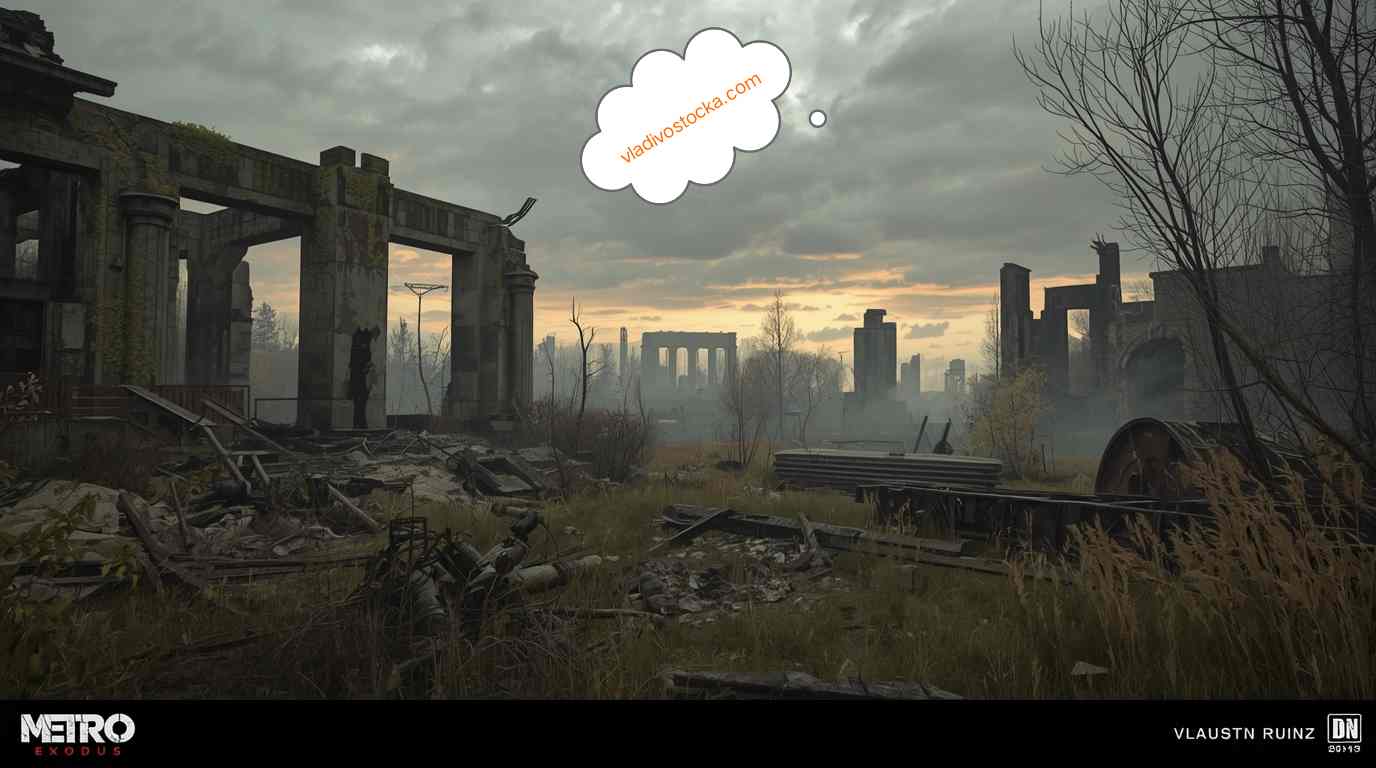
The first time players arrive in Vladivostok in Metro Exodus, the mood shifts almost instantly. Snowy silence. Rusted ships leaning against frozen docks. Empty buildings that feel as if someone just left moments ago. It’s strange and haunting at the same time.
And somewhere inside this quiet chaos lies one of the most fascinating locations in the entire Metro universe.
Many players search for vladivostock metro exodus content because this location feels different from the rest of the game. It is slower, more reflective. Less about survival shootouts and more about exploration. Hidden ruins, abandoned military structures, and fragments of forgotten stories fill the area.
If you’re curious about what makes Vladivostok in Metro Exodus so memorable, or you want to uncover the ruins most players overlook, this guide will walk you through it clearly.
What Vladivostock Metro Exodus Actually Is
The vladivostok metro exodus location appears in the expansion Sam’s Story, a downloadable chapter of the game created by 4A Games and published by Deep Silver.
Instead of following the main protagonist Artyom, this story focuses on a U.S. marine named Sam who was stationed in Russia when nuclear war devastated the world. Years later, Sam tries to return home. His journey leads him across the ruined city of Vladivostok.
The setting is striking.
Vladivostok sits on the Pacific coast of Russia, and in the game it has become a frozen graveyard of collapsed buildings, wrecked naval bases, and flooded districts. The remains of the vladivostok metro tunnels still exist, but much of the story happens above ground.
This expansion takes the player roughly 7514 km east of Moscow, a detail fans often mention when discussing the lore surrounding metro exodus 7514 km.
That distance alone tells you how far Sam has traveled across a devastated Russia.
The Real City Behind the Game
Vladivostok is a major Pacific port and the headquarters of Russia’s Pacific Fleet. In reality it’s home to around 600,000 residents.
Interestingly, there is no actual Vladivostok metro system in the real world. The city relies on buses, trams, and rail. That small detail adds a subtle layer of creativity in the game, where underground structures and abandoned military tunnels stand in for a fictional vladivostok metro network.
The developers used real geographic inspiration though. Bridges, harbors, and naval infrastructure in the game resemble the city’s famous landmarks.
That mixture of reality and fiction makes the ruins feel believable.
Exploring the Hidden Ruins in the Area
The most exciting part of vladivostock metro exodus gameplay is exploration. Unlike the tighter environments in earlier Metro titles, Vladivostok feels open and scattered.
You move through flooded streets using a small boat. Occasionally you climb onto rooftops or broken highways. Sometimes you drop into underground bunkers that look untouched for decades.
Some ruins players often miss include:
The Sunken Naval Base
This area tells a quiet story without dialogue. Rusted submarines sit half submerged in icy water. Military crates remain scattered around, many containing useful ammunition.
The location hints that the Pacific Fleet tried to mobilize during the nuclear exchange but never succeeded.
The Abandoned Captain’s Bridge
A derelict cargo ship sits tilted near the harbor. Inside, scattered documents and a radio log describe the early days after the bombs fell.
Little environmental details like this are common in vladivostok metro exodus design. They reward slow exploration rather than rushing to the next objective.
The Underground Storage Tunnels
These tunnels feel closest to classic Metro gameplay. Narrow corridors. Flickering lights. Mutated creatures lurking in corners.
Players expecting a traditional vladivostok metro environment often find it here, though the tunnels are more like storage facilities than a full subway system.
For more detail: Fans of narrative-driven games might also enjoy our take on Christian entertainment and its storytelling approaches.
How the Vladivostok Map Works
The metro exodus vladivostok map is smaller than regions like the Volga but far denser in storytelling.
Movement revolves around three main paths:
Boat travel across flooded streets
Short land routes connecting buildings
Underground areas linking important objectives
Fans often search for a metro exodus vladivostok interactive map to locate hidden gear or optional locations. These maps usually mark:
Weapon upgrades
Safe houses
Diary pages
Environmental story points
Unlike earlier chapters, Vladivostok encourages backtracking. You might discover an upgrade hours after you first passed the building containing it.
That design choice gives the area a natural sense of discovery.
Sam’s Story and Why It Matters
The narrative of metro exodus sam’s story vladivostok is surprisingly emotional.
Sam isn’t just surviving. He’s searching for a way home.
Throughout the ruins, players meet characters who challenge his hope. Some believe the outside world is gone forever. Others cling to rumors of functioning governments beyond the ocean.
The expansion eventually leads Sam to a submarine that might reach the United States.
Whether that journey succeeds depends on player decisions.
It’s a small story compared to the main game, yet it feels deeply personal. That’s why many fans consider Vladivostok one of the best narrative environments in Metro Exodus.
Gameplay Mechanics Unique to This Area
A few gameplay elements make vladivostock metro exodus feel distinct.
First, the boat.
Traveling through flooded ruins changes pacing. Combat becomes less frequent, exploration more prominent. You often hear distant sounds across water, which adds tension.
Second, vertical navigation.
Broken highways, cranes, and rooftops create layered environments. Players constantly move between water level and elevated structures.
Third, environmental puzzles.
Doors jammed by debris. Power switches hidden in maintenance rooms. Small obstacles that require observation rather than brute force.
These design choices slow the game down in a good way.
You notice details.
System Requirements and Game Size
Many players searching for metro exodus system requirements are planning to experience Vladivostok for the first time.
According to the official requirements listed by NVIDIA and the publisher, the approximate metro exodus minimum requirements include:
Intel Core i5 class processor
8 GB RAM
DirectX 11 compatible GPU such as GTX 670
Around 59 GB storage space
The total metro exodus size varies slightly depending on platform and DLC installation, but most PC installations range between 60 and 80 GB.
Modern GPUs dramatically improve lighting and water reflections in the Vladivostok chapter. The frozen harbor looks particularly stunning with ray tracing enabled.
Player Statistics and Community Interest
The popularity of Metro Exodus and its expansions has remained strong years after release.
According to player statistics discussed in an article by PC Gamer, the game surpassed 6 million copies sold worldwide within a few years of release, with expansion chapters like Sam’s Story significantly increasing long term engagement.
Meanwhile, tracking data from Steam shows thousands of active players still exploring the game years later.
That continued interest explains why topics like vladivostock metro exodus maps, secrets, and hidden ruins remain popular search queries.
Players keep returning to uncover details they missed.
Connections to Other Metro Regions
Earlier in the game, players explore places like the Volga region. Some fans even search unusual phrases such as metro exodus volga 3 paladins, referencing combat encounters involving heavily armored enemies.
Those areas are more combat focused.
Vladivostok feels different. Almost reflective.
It’s the final stretch of Sam’s journey, and the design reflects that quieter tone.
Instead of large battles, the game leans into atmosphere.
Snow falling across empty docks. A radio crackling with static. Footsteps echoing in abandoned corridors.
Small moments linger longer than gunfights.
Limitations of the Vladivostok Chapter
As memorable as it is, the Vladivostok expansion does have some limitations.
The map size is smaller than other open regions in Metro Exodus. Experienced players can complete the story in roughly 5 to 6 hours.
Enemy variety is also limited compared to earlier chapters. Most encounters involve familiar mutants or human enemies rather than entirely new threats.
And because much of the exploration occurs above ground, players hoping for a fully developed vladivostock metro exodus subway system might feel slightly disappointed.
Still, the environmental storytelling makes up for those limitations.
It’s less about scale.
More about atmosphere.
Why Players Still Talk About Vladivostok
There’s a reason the vladivostock metro exodus setting keeps showing up in fan discussions.
It represents something rare in video games. A quiet ending to a violent world.
Sam moves through ruins not just to survive but to reconnect with a life he lost.
The abandoned harbor. The frozen skyline. The submarine waiting offshore.
Everything hints at the possibility of leaving Russia behind.
And for a series built on underground survival, that idea of open ocean feels strangely hopeful.
The coastal city of Vladivostok inspired the frozen, atmospheric ruins featured in the Metro Exodus expansion.
Conclusion for vladivostock metro exodus
The vladivostock metro exodus chapter may not be the largest area in Metro Exodus, but it’s one of the most memorable. The ruined Pacific port offers a mix of exploration, environmental storytelling, and emotional narrative rarely seen in post apocalyptic games.
Hidden naval bases, flooded streets, and abandoned military tunnels create a world that feels believable and haunting at the same time.
If you take the time to explore slowly, Vladivostok reveals dozens of small details most players miss.
And those quiet discoveries are exactly what make the location worth visiting again.
FAQs about vladivostock metro exodus
What is vladivostock metro exodus?
Vladivostock metro exodus refers to the setting of the Sam’s Story expansion in Metro Exodus. It is a ruined version of the Russian city Vladivostok where the character Sam searches for a way to return to the United States.
Is there a real Vladivostok metro system?
No. The real city of Vladivostok does not have a metro subway system. The game uses underground tunnels and fictional structures inspired by military facilities instead.
How long is Sam’s Story in Metro Exodus?
Most players complete the Vladivostok chapter in about five to six hours depending on exploration and difficulty level.
What is the metro exodus vladivostok map?
It is the map used in the Sam’s Story expansion. It features flooded streets, naval bases, underground tunnels, and hidden loot locations.
Is there a metro exodus vladivostok interactive map online?
Yes. Several fan sites provide interactive maps showing weapon upgrades, safe houses, diary pages, and hidden secrets across Vladivostok.
What are the metro exodus system requirements for PC?
The minimum requirements include an Intel Core i5 processor, 8 GB RAM, and a DirectX 11 compatible graphics card such as GTX 670.
How big is Metro Exodus in storage size?
The typical installation size ranges between 60 and 80 GB depending on platform and installed expansions.
What does metro exodus 7514 km mean?
It refers to the distance Sam travels east from Moscow to Vladivostok during the events surrounding his story.
Is Sam’s Story connected to the main Metro Exodus campaign?
Yes. It takes place after the main story and focuses on Sam, a secondary character from the Aurora crew.
Is Vladivostok one of the best areas in Metro Exodus?
Many players consider it one of the most atmospheric locations in the game due to its unique coastal environment and emotional narrative.
For more information visit the website
